


The current international legal order is experiencing unprecedented challenges, as the war in Ukraine forces the global community to question whether existing mechanisms can truly hold Russia accountable.
To understand the intricacies of investigating war crimes, the legal pitfalls, and the effectiveness of arrest warrants, it is worth analyzing the position of Abdelrahman Fayad, an expert in international humanitarian and criminal law.
Measures to punish genocide and the blockade of ports
One of the most challenging aspects of the International Criminal Court’s (ICC) practice is proving the specific intent behind military or economic port blockades. There is no universal approach here, as Mr. Fayad points out:
“There is no single path to proving intent in international law, because the real challenge is often not whether something is visible, but how it can be legally demonstrated. Satellite imagery, for example, may help establish the existence and scope of a blockade, while public statements can be critical in revealing the reasoning and intent behind it, especially when officials openly acknowledge the expected humanitarian consequences for civilians.”
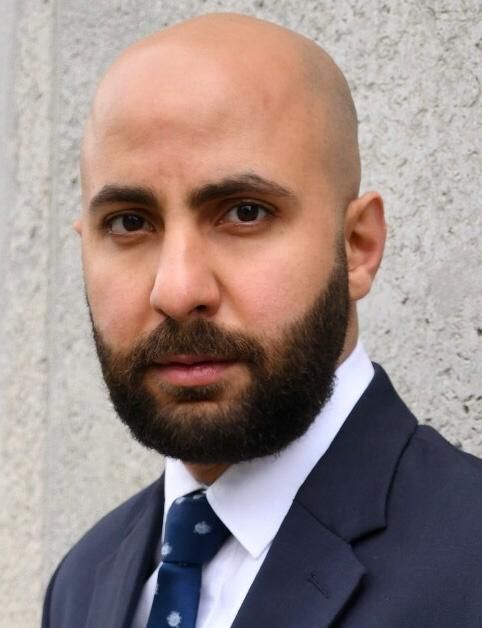
Abdelrahman Fayad
Port blockades and the destruction of infrastructure are legally difficult to prove. The Genocide Convention does not focus on the scale of destruction, but rather on whether a population was deliberately deprived of essential resources despite obvious humanitarian consequences.
“The Genocide Convention does not require a specific numerical threshold of destruction, but rather evidence that conditions of life were deliberately inflicted in a way calculated to contribute to the physical destruction of a protected group, in whole or in part,” explains the practicing lawyer.
At the same time, the history of international tribunals has yet to see cases where a blockade or artificial famine was successfully classified as genocide. However, in November 2024, the ICC issued arrest warrants for Benjamin Netanyahu and Yoav Gallant for using starvation as a war crime. This sets an important precedent for Ukraine as well. According to the expert, the lesson for Ukraine is that holding perpetrators accountable for starvation as a war crime is more achievable than for genocide, since it requires proving awareness of the likely harm to the civilian population, rather than a specific intent to destroy a protected group.
Individual and State Damages: What Is the Likelihood of Receiving Compensation?
Questions often arise regarding compensation for destroyed port or logistics infrastructure. In this case, unfortunately, the International Criminal Court lacks the necessary jurisdiction. The ICC’s mandate focuses primarily on individual criminal responsibility, rather than state responsibility. Although the Court may order the payment of reparations to victims in connection with crimes falling within its jurisdiction, it is not designed to award compensation to states for infrastructure damage or economic losses.
However, there is a clear distinction between these concepts, and the destruction of infrastructure will by no means go without a legal assessment. As Abdelrahman Fayad notes, the ICC may be appropriate for establishing individual liability and awarding damages to victims, whereas compensation at the state level should generally be sought through parallel mechanisms, such as the International Register of Damage, the International Court of Justice, or other international processes.
Diplomatic Immunity and the Arrest Warrant Enforcement Crisis
Ukraine is currently actively discussing the establishment of a Special Tribunal. However, one of the most critical aspects of international justice remains the actual enforcement of rulings. Even the existence of ICC arrest warrants for heads of state does not guarantee their immediate detention due to diplomatic immunity and the provisions of the Vienna Convention.
“The Special Tribunal for the Crime of Aggression is one possible mechanism, but not the only theoretical route in international law. Other avenues include universal jurisdiction in limited circumstances and ICC jurisdiction for crimes such as war crimes, crimes against humanity, or genocide, where applicable. In practice, however, the key issue is not only legal design but whether enforcement mechanisms can function in reality, since legal qualification alone does not guarantee implementation,” the expert notes.
At the same time, a logical question arises: What kind of justice can Ukrainians hope for if the Russian leadership evades punishment, and wouldn’t this demonstrate the helplessness of international law? Abdelrahman explains this as follows:
“I personally would hesitate to describe it as the collapse of a post-war international legal system, because I do not believe such a fully functioning and equally enforced system has ever truly existed in practice.”
Therefore, the legal and practical aspects remain highly relevant, as the issuance of warrants does not guarantee their actual execution, regardless of the severity of the crimes.
The Use of Artificial Intelligence in Court
Modern investigations actively employ AI technologies to analyze satellite imagery. However, the use of artificial intelligence in legal proceedings is a double-edged sword, as the defense will always seek opportunities to challenge the reliability of such evidence.
“From my perspective, the real legal challenge is not the existence of AI-assisted analysis, but the extent to which the court can trust and verify the process behind it. Defense teams may challenge authenticity by questioning algorithmic bias, manipulation risks, lack of explainability, or whether the technology merely interpreted patterns rather than establishing factual certainty,” the expert said.
According to Mr. Fayad, in such cases, the burden of proof falls on the prosecution, which must demonstrate the direct “source of the underlying data.” After all, courts are generally conservative and focus not on the novelty of technology, but on transparency and independent data verification.
“International courts are designed to operate through legal reasoning and evidence, but in reality, they do not exist completely outside political and institutional environments. From my perspective, legal arguments form the structure of a case, but political dynamics and international alignment often influence how, and whether, those legal findings translate into enforcement,” the expert shared.
The Rule of Law or Power Politics
Consequently, Ukraine must focus on gathering irrefutable evidence of starvation, blockades, property damage, and infrastructure destruction. Given the prospects of investigations by the International Criminal Court, the challenge is systemic: international law provides mechanisms for documenting facts, but the question is whether these mechanisms can function independently of power politics.
Of course, legal arguments and evidence can build a solid framework for a case, but the final outcome always depends on geopolitical will. International law possesses the tools to document crimes, but the international community’s willingness to enforce these decisions – regardless of the political weight of the accused party – remains the central open question of our time.
Author: Anna Lishchynska